Orange or rust-colored stains, metallic-tasting water, and reddish sediment can indicate iron in well water. Manganese can create similar problems but is more commonly associated with brown or black staining. Both can occur in private wells, and the right treatment depends on which minerals are present, their concentrations, and the water’s overall chemistry. Test your well water before choosing a filtration system.
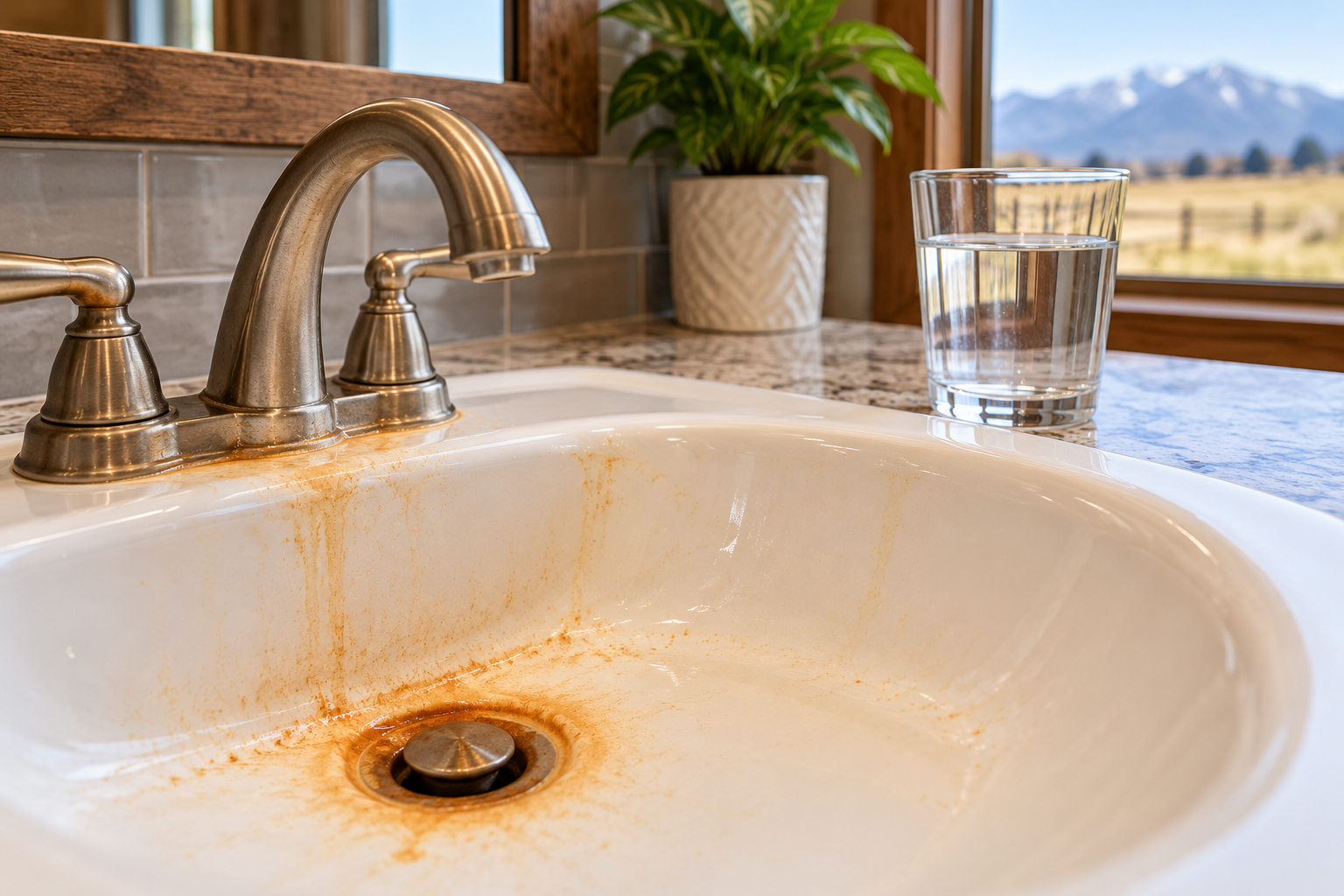
Iron in well water can turn an everyday water-quality issue into a constant cleaning problem. Orange stains can appear around toilets, tubs, sinks, and showers. White laundry may develop rusty discoloration. Drinking water can take on a metallic taste.
For some private-well homes in Southwest Idaho, manganese may be present as well. Although iron and manganese are often discussed together, they don’t always leave the same clues and may not require the same treatment.
Kinetico of SW Idaho encounters iron and manganese in private wells around communities such as Kuna, Melba, Marsing, Middleton, Emmett, Star, Payette, and other rural areas. The important first step isn’t guessing which filter you need. It’s finding out what is actually in the well water.
Quick Facts About Iron and Manganese
Iron is commonly associated with reddish or orange staining, rusty-colored water, sediment, and metallic taste.
Manganese is more commonly associated with dark brown or black discoloration and staining.
Private-well owners are responsible for monitoring their own drinking water quality, making regular testing particularly important.
Iron and manganese treatment depends on concentration, water chemistry, and the form in which the minerals are present. Testing should come before equipment selection.
What Are the Signs of Iron in Well Water?
The most recognizable signs of iron in well water are rust-colored water, reddish or orange staining, sediment, and metallic taste.
Iron may show up around:
- Toilet bowls and tanks
- Bathtubs and showers
- Bathroom and kitchen sinks
- Tile and grout
- White laundry and towels
- Water-using appliances and fixtures
EPA’s secondary drinking water guideline for iron is 0.3 milligrams per liter (mg/L). This is an aesthetic guideline rather than a federal health-based primary drinking water standard. Above the secondary level, iron can contribute to rusty color, sediment, metallic taste, and reddish or orange staining.
If iron is entering your home through the well water, cleaning the fixture only removes the stain—not its source. As untreated water continues reaching the fixture, new deposits can appear. Treating the water before it reaches those surfaces addresses the problem upstream.
Why Can Clear Well Water Turn Orange?
Iron doesn’t always come out of a well looking rusty.
Some groundwater contains dissolved iron that may initially appear clear. When that iron is exposed to oxygen, it can oxidize and form reddish-brown particles. That’s why well water can look clear at first but later develop discoloration or leave stains after sitting or contacting air.
This distinction also matters when choosing treatment. Dissolved iron and already-oxidized iron don’t necessarily behave the same way, and a treatment system should be selected around the actual condition of the water.
How Is Manganese Different From Iron in Well Water?
Manganese can cause some of the same frustrating aesthetic problems as iron, but the staining often looks different.
While iron typically produces reddish or orange stains, manganese is more commonly associated with black or brown staining and discoloration. It may also contribute to an unpleasant or bitter metallic taste.
EPA lists a secondary guideline of 0.05 mg/L for manganese. However, manganese deserves additional attention beyond aesthetics. Idaho’s Department of Health and Welfare advises that long-term exposure to high manganese levels may cause health problems, with particular concern for infants and neurological effects.
Brown or black staining can be a clue, but appearance isn’t a substitute for testing. If manganese is suspected in a private well, use appropriate water testing to determine whether it is present and at what concentration before selecting treatment.
Why Do Southwest Idaho Private Wells Have Iron and Manganese?
Private wells draw groundwater directly from underground formations. As groundwater moves through soil and rock, naturally occurring minerals can dissolve into it.
That means two homes in the same general area can have different well-water conditions. Well depth, geology, groundwater conditions, plumbing, and other factors can affect what ultimately reaches the tap.
Kinetico of SW Idaho reports commonly finding iron and manganese when testing private wells in communities including Kuna, Melba, Marsing, Middleton, Emmett, Star, Payette, and surrounding rural areas.
Those wells can also present other concerns, including hardness, hydrogen sulfide, sediment, grit, or bacteria. That’s an important reason not to select an iron filter based only on an orange toilet stain.
Does Metallic-Tasting Well Water Mean You Have Iron?
It can, but metallic taste alone doesn’t prove iron is the cause.
Iron is one potential source of metallic taste. Manganese and other water conditions may also affect taste, while plumbing and corrosion can introduce additional possibilities.
Think of metallic taste as a reason to investigate rather than a diagnosis.
If the taste appears alongside orange staining and rusty sediment, iron becomes a stronger possibility. Testing can confirm the mineral content and help distinguish between overlapping water-quality problems.
How Do Iron Filtration Systems Work?
An iron filtration system is designed to remove iron from the water before it reaches the fixtures, laundry, plumbing, and other areas where staining and buildup become noticeable.
Kinetico of SW Idaho’s iron filtration systems are sized according to the iron level identified during water testing. The systems use filtration and backwashing to capture and remove iron from the home’s water supply.
But iron treatment isn’t one-size-fits-all. Depending on the form and concentration of iron or manganese, treatment may involve oxidation followed by filtration or another approach suited to the water chemistry.
That’s why a filter that works well on one well isn’t automatically the right choice for the house down the road.
Effective well water treatment starts with knowing the concentration and type of problem you’re treating. The test helps determine equipment type and sizing instead of forcing the water to fit a predetermined system.
Do You Need a Water Softener or an Iron Filter?
It depends on what your water test finds. A water softener and an iron filtration system solve different primary problems.
A softener is designed primarily to remove hardness minerals such as calcium and magnesium. An iron filtration system is designed specifically around iron removal. Some wells contain both hardness and iron, which may require treatment designed around both conditions.
High iron levels can also interfere with water-softening equipment, another reason the order of treatment matters.
Kinetico of SW Idaho’s well water treatment systems may use multiple treatment stages when testing identifies several concerns. A system could include sediment filtration, treatment for iron or sulfur, softening, disinfection when appropriate, and drinking water treatment depending on the specific well.
What If Your Well Water Also Smells Like Rotten Eggs?
Orange staining plus a rotten-egg odor can indicate that you’re dealing with more than one water problem.
The characteristic rotten-egg smell is commonly associated with hydrogen sulfide. Kinetico of SW Idaho reports that sulfur and iron can occur together in private wells, which means the treatment approach needs to account for both rather than treating the odor and staining as unrelated problems.
This is another example of why troubleshooting by symptom alone can lead homeowners toward the wrong equipment.
Why Well Water Testing Should Come Before Treatment
Private wells aren’t managed like public water systems. Idaho DEQ notes that private wells are not regulated under the federal Safe Drinking Water Act, so the well owner is responsible for ensuring the water is safe.
Testing is therefore about more than confirming that an orange stain contains iron.
A comprehensive approach to private-well water should consider the other conditions that may matter for treatment and drinking-water safety. Kinetico of SW Idaho’s professional water testing can help identify common mineral and aesthetic concerns and guide treatment recommendations.
For health-related private-well contaminants, appropriate certified laboratory testing may also be necessary. Idaho provides resources for certified laboratories and private-well sampling.
Tired of Orange Stains Coming Back?
Find out whether iron, manganese, or another well-water condition is behind the staining before choosing treatment.
Local Well Water Treatment in Southwest Idaho
Well-water treatment is particularly relevant outside the municipal core of the Treasure Valley, where many homes rely on private groundwater wells.
Kinetico of SW Idaho tests private wells throughout communities such as Kuna, Melba, Marsing, Middleton, Emmett, Star, Payette, and surrounding rural areas. The company also serves homeowners throughout Boise, Meridian, Nampa, Caldwell, Eagle, Garden City, McCall, and other Southwest Idaho communities.
The important distinction is that local experience doesn’t replace testing. It helps professionals know what problems to investigate, while the individual water test determines what a particular home actually needs.
Frequently Asked Questions About Iron and Manganese in Well Water
Is iron in well water dangerous?
EPA regulates iron under its secondary drinking water guidelines, which address aesthetic and technical concerns rather than a federal health-based primary standard. Iron can cause rusty color, sediment, metallic taste, and reddish or orange staining.
What color stains does manganese leave?
Manganese is commonly associated with black or brown staining and discoloration. Testing is needed to confirm its presence and concentration because stain color alone cannot reliably identify a contaminant.
Why does my well water look clear and then turn orange?
Dissolved iron can initially be present in clear-looking groundwater. After exposure to oxygen, the iron can oxidize into particles that give the water a reddish-brown appearance and create staining.
Will a water softener remove iron from well water?
Some softeners may handle limited amounts or certain forms of iron, but a water softener is primarily designed for hardness. Higher iron levels or different forms of iron may require dedicated filtration. Testing should determine the treatment approach.
Can iron and manganese occur in the same well?
Yes. Iron and manganese can occur together in groundwater. Treatment should account for the concentration of each mineral as well as other water characteristics that affect filtration performance.
Does a rotten-egg smell come from iron?
A rotten-egg odor is more commonly associated with hydrogen sulfide rather than iron itself. However, sulfur and iron can occur in the same private well, so both conditions may need to be considered when designing treatment.
Stop Treating the Stain and Start With the Water
Orange stains are easy to see. The chemistry creating them isn’t.
If you’re repeatedly scrubbing rust-colored deposits from a toilet, sink, shower, or laundry, testing can tell you whether iron is entering the home through your well. It can also identify manganese and other conditions that may change the treatment you need.
The right solution isn’t simply an “iron filter.” It’s a treatment system selected and sized for the water coming from your particular well.
Get your well water tested for iron with Kinetico of SW Idaho and find out what’s behind the stains before deciding what comes next.